
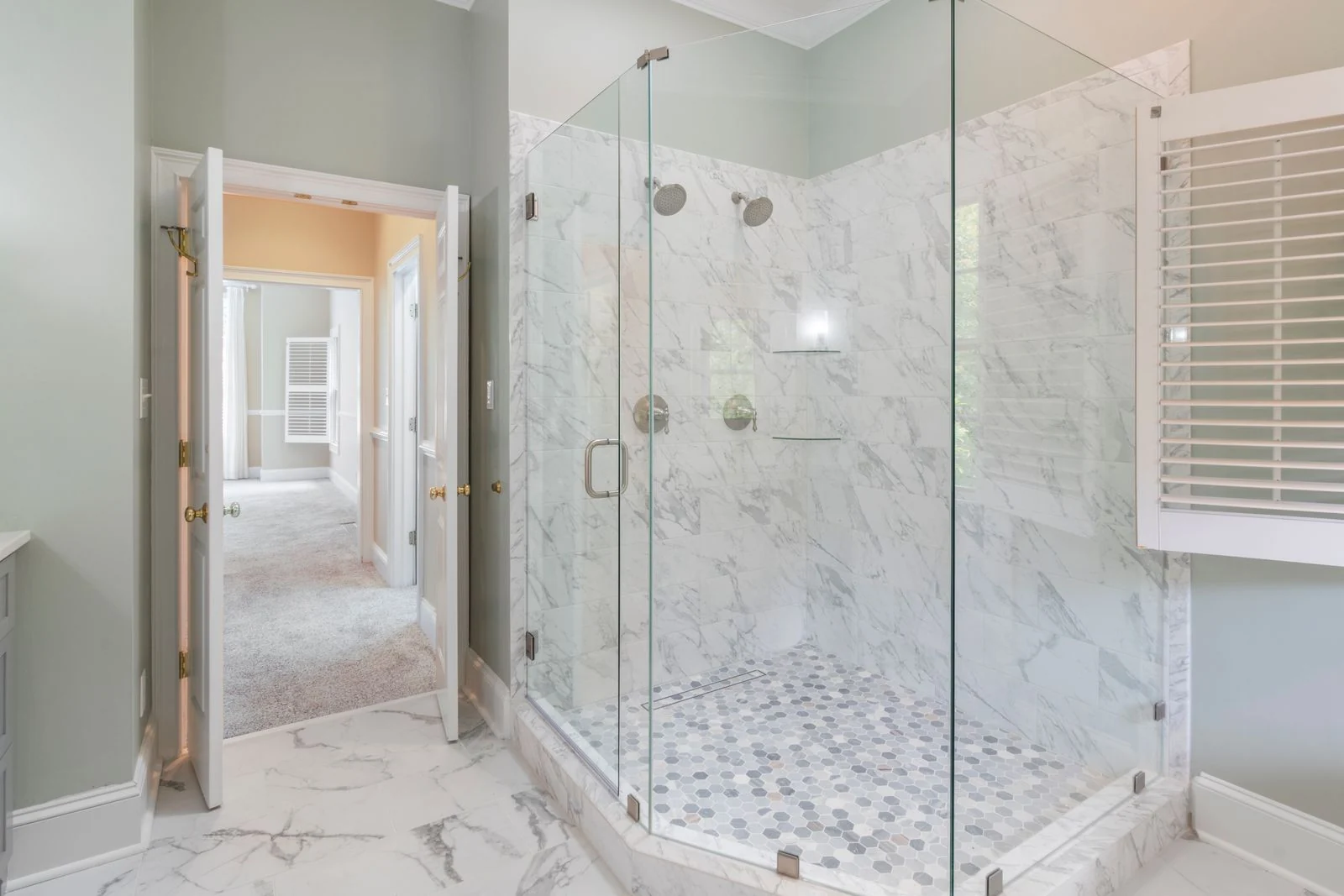
Look at samples where they will be used
View a sample in the bathroom during daylight and under the existing artificial light. Hold wall finishes vertically and flooring horizontally. This gives a better indication of the final appearance than a photograph taken in a brightly lit showroom.
Build a small, complete palette
Compare the main wall finish, floor, vanity colour and metal finish together. Decide which surface should draw attention and which should provide a quieter background. Several attractive samples can compete when they are combined across a small room.
Check the exact metal finishes
Brushed, polished and matt finishes vary between products and manufacturers. If a consistent look matters, compare the taps, shower fittings, handles and accessories before ordering. Keep product references with the quote so the selected versions are clear.
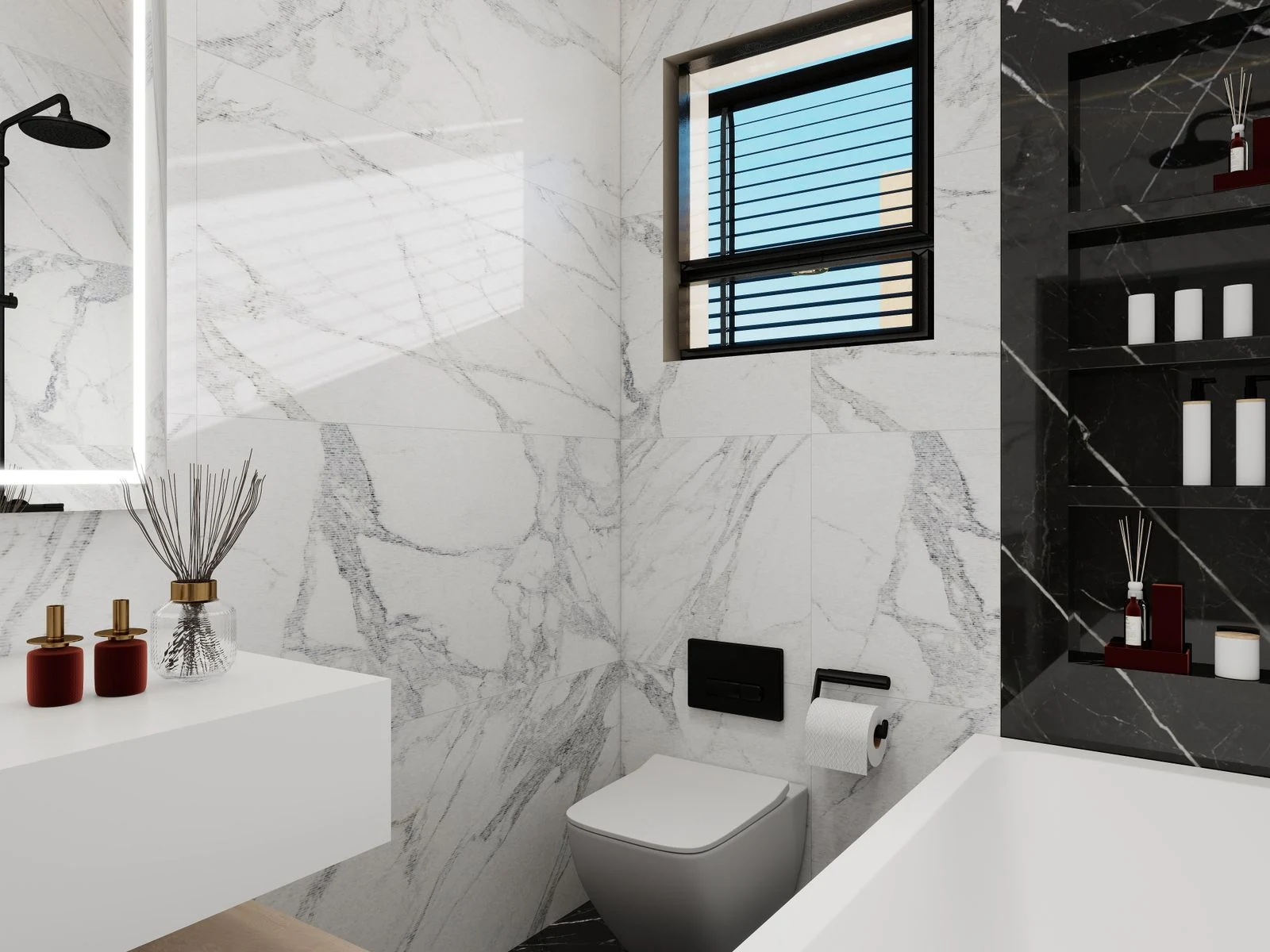
Discuss lighting before choosing wall finishes
Explain where you need practical light, such as at the mirror, as well as the overall feeling you want. Ask the appropriate installer to assess suitable fittings and positions for the bathroom. Plan the work before decorating or closing up surfaces.
Choose for everyday care
Texture and dark surfaces may reveal marks differently from pale, smooth ones. Read care guidance for the actual products and consider your cleaning routine. The aim is a room you enjoy using, not a combination that only looks right in a carefully staged photograph.
Identify the light you already have
Note whether the room receives much daylight and which surfaces look shaded during normal use. A frosted window, deep reveal or neighbouring building can change the character of the light without making the room unusable. Look at the existing mirror area separately from the general room. Explain any frustration, such as a shadow when shaving or applying make-up, in practical terms. You do not need to select the electrical solution before discussing it with the appropriate installer. Our natural bathroom finishes guide offers ideas for warm materials and simple palettes, but the actual samples should still be considered under your room’s own conditions.
Compare a manageable set of real samples
Start with the main wall surface, flooring and vanity finish. Put them together before adding smaller metal details. If a sample is tiny, ask how the pattern repeats across the larger product and whether there is deliberate variation between pieces. Stand back from the group as well as looking closely; a texture that is subtle in your hand may become dominant across a whole wall. Keep photographs and product codes as a record, while remembering that a phone camera can alter colour. Reducing the options to a small coordinated set makes the next conversation more useful than bringing dozens of unrelated images and expecting every finish to work together.
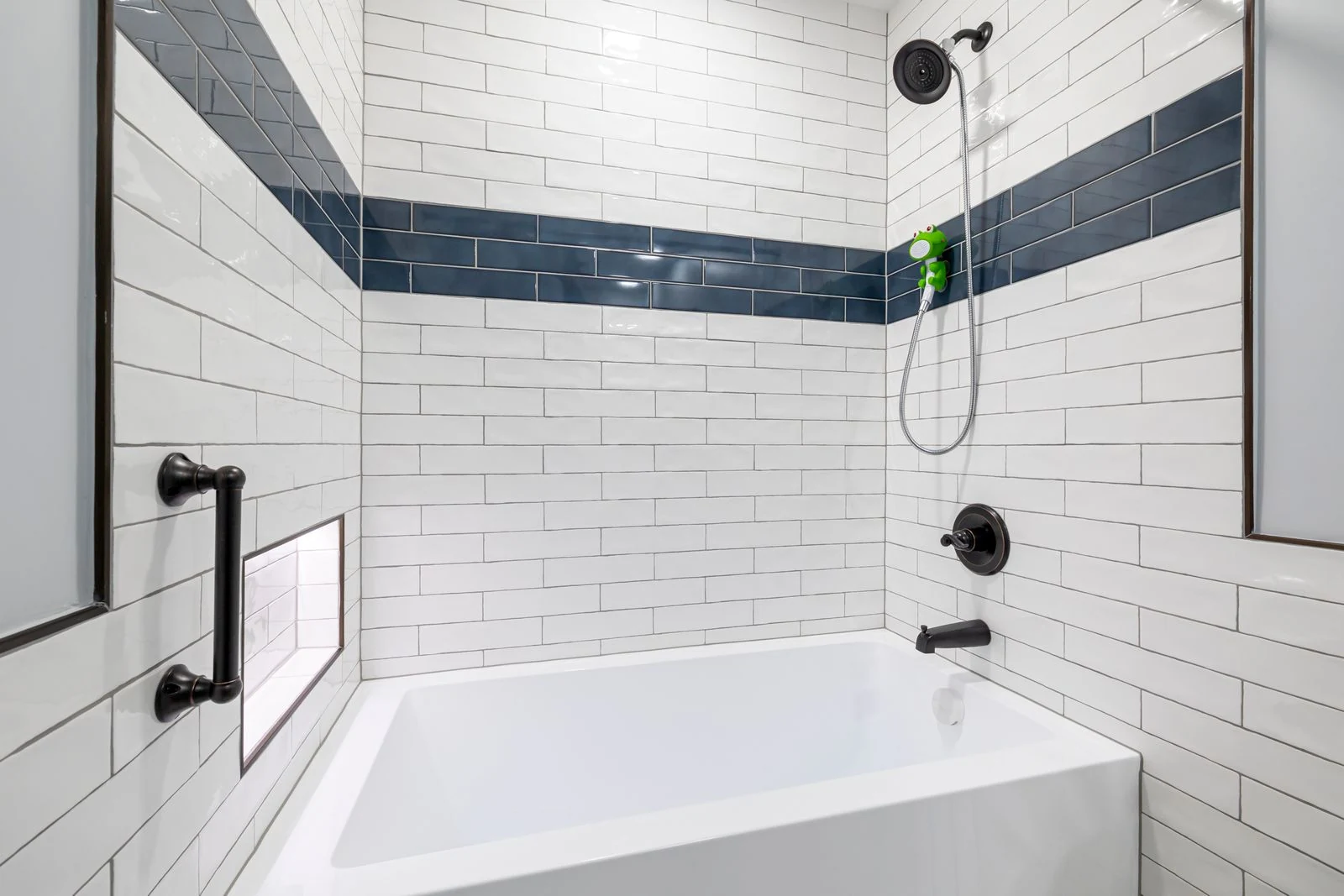
Use contrast where it helps the room
A contrast can make a vanity, tap or shower screen easier to see, but it does not need to appear on every surface. Decide which features should stand out and give the surrounding materials a quieter role. In a small bathroom, too many competing patterns or metal colours can make the layout feel busier than it is. This is a design preference rather than a universal rule: choose an effect you like and test it with samples. If you have specific visual or access needs, discuss those directly so that the proposed layout and fittings can be assessed for the people who will use them.
Coordinate lighting decisions with storage and mirrors
Mirror cabinets, shelves and wall lights occupy the same limited area around the basin. Plan their positions together and check door openings, reflections and practical access. Describe where you want useful light, then ask the appropriate installer to assess products and installation requirements for the bathroom. Avoid buying a fitting solely because it resembles one in a photograph. Keep exact model details and intended positions in the specification. The bathroom storage guide helps you consider cabinet depth and usable shelf space alongside the mirror. Resolving these items early reduces the chance of choosing a light that conflicts with the furniture already ordered.
Make the final check about daily use
Before approving the palette, think about wet hands, water marks, cleaning and how the surfaces feel to live with. Ask for care information for the actual products, including metal finishes and any textured areas. Compare the complete specification with the room’s maintenance needs rather than relying on a general claim that a finish is durable or low maintenance. Our comparison of tiles and wall panels explains why joints and edges matter alongside appearance. Keep the final sample references with the quote. A well-chosen bathroom can feel modern and well matched through coordinated details, without needing a huge room, elaborate fittings or an oversized bath.
Keep the exact names of your bathroom finishes
Keep the exact colour name, product code and finish description for every selected item. Two products described informally as beige or brushed brass can look noticeably different together. Confirm any proposed substitute against the other finishes before accepting it. If samples are borrowed, photograph the labels as a useful reference and return them as agreed. The written schedule should identify the products you approved, while your sample comparisons explain why they work together. This is especially helpful when orders are placed at different times or by more than one person.